

Kikuyu grass is one of South Africa’s most popular instant lawns — known for its fast growth, durability, and vibrant green colour. Perfect for sunny gardens, sports fields, and play areas, our farm-fresh Kikuyu grass is grown and harvested locally, ensuring top quality and fast delivery across Pretoria and Gauteng.

Kikuyu Grass Benefits:
Grows quickly and covers bare soil fast
Thrives in full sun and warm climates
Creates a thick, lush green lawn
Very resilient and easy to repair
Excellent for high-traffic areas like backyards and sports fields
| Feature | Kikuyu Grass | LM Grass |
|---|---|---|
| Sunlight Needed | Full sun required | Grows well in shade and semi-shade |
| Growth Speed | Very fast | Moderate |
| Texture | Medium to coarse | Soft and fine |
| Water Requirements | Moderate to high | Low to moderate |
| Ideal For | Sunny lawns, active areas, sports use | Shaded gardens, decorative use |
💡 Tip: Many homeowners use Kikuyu for open sunny areas and LM grass under trees or shaded spots for the perfect garden mix.

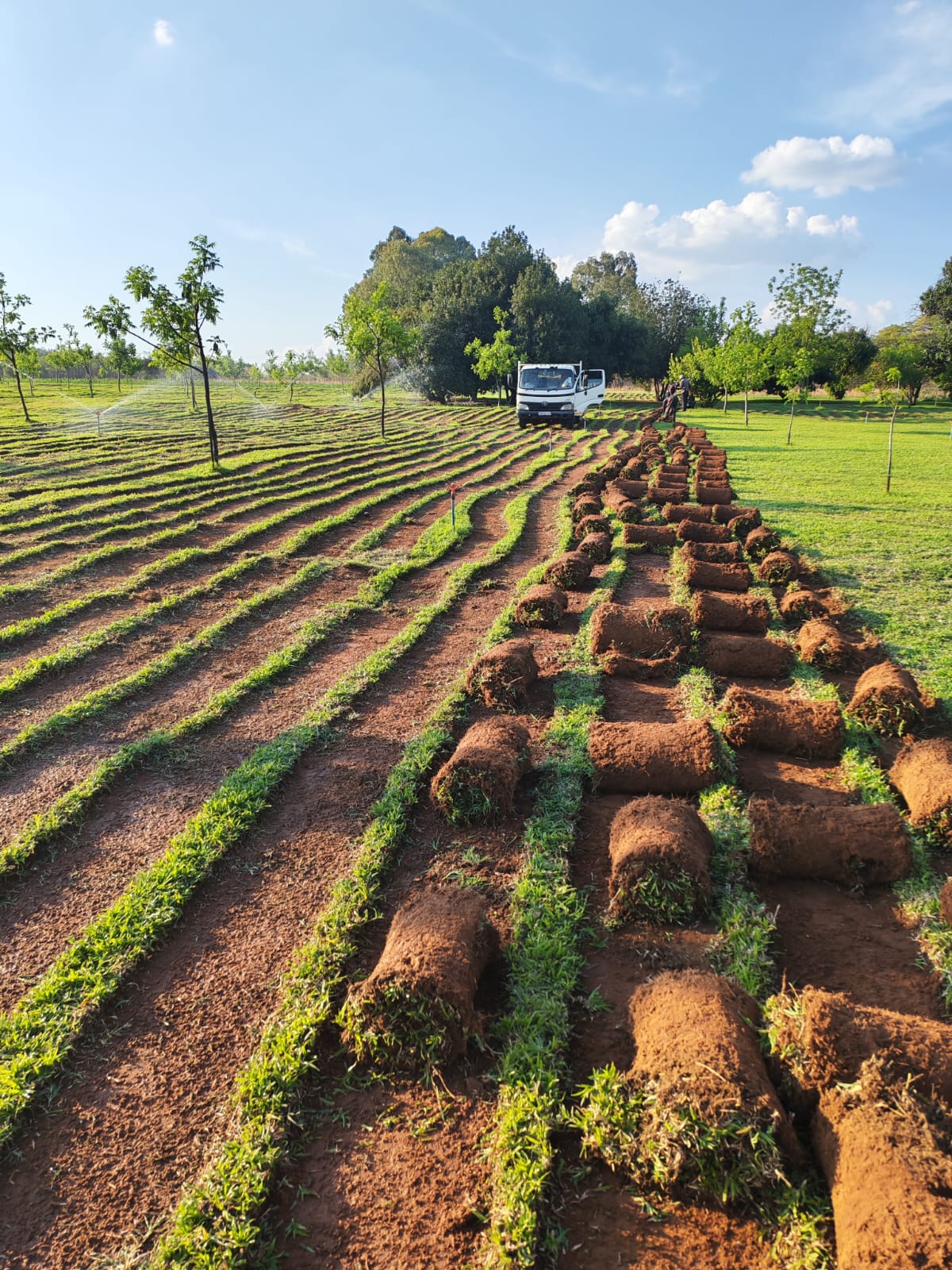
We cut and roll our Kikuyu grass fresh to order, ensuring your instant lawn arrives healthy and ready to lay.
Delivery areas include Pretoria East, Centurion, Midrand, Johannesburg North, and surrounding suburbs.
* Delivery fees apply based on distance. Ask us for an exact quote.

Use our Instant Lawn Calculator:
Measure the area in square meters
Add 5–10% extra for trimming and offcuts
Contact us to confirm pricing and availability
Use our calculator to estimate the amount of lawn you'll need for your project. Just enter your area in square meters below, and we'll add the extra for trimming and offcuts.
Estimated area required:
Kikuyu is one of South Africa’s toughest and fastest-growing lawn types, but to keep it thick, green, and healthy all year round, it needs consistent maintenance.
Here’s how to care for your Kikuyu lawn properly:
New lawns: Water every day for the first 7–10 days after installation until the sods root firmly.
Established lawns: Water deeply 2–3 times per week during summer. Kikuyu thrives in well-watered soil but can tolerate short dry spells once mature.
Avoid shallow watering — it encourages weak, surface roots.
Kikuyu grows fast, especially in warm months, so regular mowing is key.
Maintain a height of 3–4 cm (30–40 mm).
Never remove more than one-third of the leaf blade at a time — frequent light trims keep the lawn dense and soft.
Always use sharp mower blades for a clean, even cut.
Feed Kikuyu every 6–8 weeks during the active growing season (spring to autumn).
Use a high-nitrogen fertiliser (such as 4:1:1 or 5:1:5) to promote strong, green growth.
In winter, switch to a balanced fertiliser with added iron to help retain colour.
Always water thoroughly after applying fertiliser.
Kikuyu needs full sun to stay lush and green.
It does not perform well in shaded or heavily covered areas — replace shaded patches with LM grass if needed.
Ensure surrounding plants or trees don’t block sunlight for long periods.
Aerate the lawn once or twice a year, preferably in spring and early summer.
This improves water absorption, prevents compaction, and encourages deep rooting.
After aeration, top-dress with fine compost or lawn dressing for nutrient replenishment.
Kikuyu’s dense growth naturally reduces weed invasion, but occasional weeds may appear.
Hand-remove or use a selective herbicide suitable for Kikuyu lawns.
Watch for pests like armyworms or lawn caterpillars during summer — treat early with a recommended lawn insecticide.
Kikuyu tends to develop thatch (a dense mat of old roots and stems).
Dethatch once a year in late winter or early spring using a metal rake or scarifier.
Follow up with aeration and fertilisation for quick recovery.
In winter, Kikuyu may go slightly dormant and lose colour — don’t overwater or over-fertilise during this time.
Begin your spring care routine with a light fertiliser and a good mow once growth picks up.
For frost-prone areas, avoid heavy traffic on the lawn in the early mornings.
Avoid compacting the lawn — limit vehicle parking or heavy foot traffic on wet grass.
Trim edges regularly for a neat, defined look.
If you notice bare patches, overseed in early spring to help the lawn repair itself quickly.